Table of Contents (15 sections)
In recent years, drone technology efficiency has emerged as a game-changer across multiple industries. This innovative technology allows companies to optimize operations, enhance productivity, and reduce costs. By employing drones, businesses can streamline their processes, ensure safety, and gain access to real-time data for better decision-making. In this article, we will delve into how drone technology is revolutionizing industrial efficiency in sectors such as agriculture, construction, logistics, and more.
What is Drone Technology?
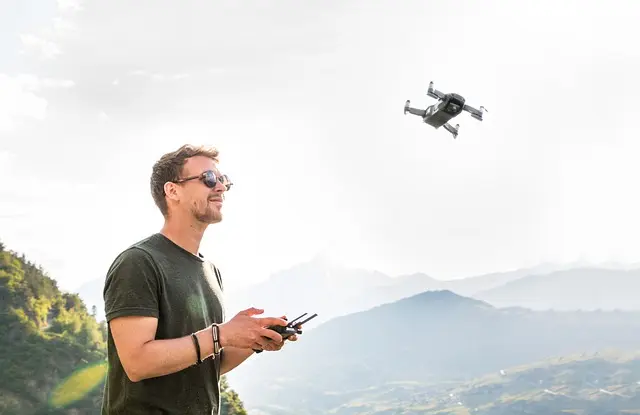
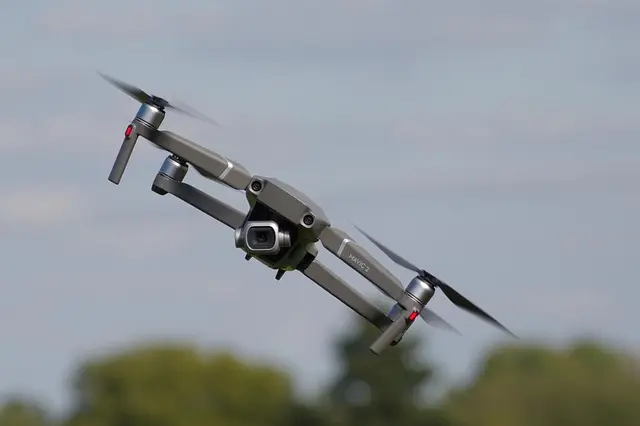
Drone technology refers to the use of unmanned aerial vehicles (UAVs) equipped with various sensors and cameras. These devices can fly autonomously or be remotely controlled and are capable of capturing data from the air. Drones are used for a variety of purposes, including aerial photography, surveying, mapping, and monitoring. The applications are vast, but what stands out is their ability to improve efficiency across various industries by providing a unique aerial perspective that traditional methods cannot match.
Drones operate with sophisticated technology, including GPS and advanced sensors, allowing them to cover large areas quickly and accurately. According to the Federal Aviation Administration (FAA), there are over 1.5 million registered drones in the United States alone, signifying their growing role in everyday operations. With advancements in technology, the use of drones has expanded to include AI and machine learning capabilities, which further enhance their functionality and effectiveness.
How Drone Technology is Improving Efficiency
Agriculture
One of the most notable applications of drones is in agriculture, where they are transforming farming practices. Drones equipped with multispectral cameras can rapidly assess crop health, identifying areas that require water, fertilizer, or pesticides. This capability leads to more targeted interventions, reducing waste and optimizing resource usage. A study by the USDA highlighted that farmers using drone technology reported an average yield increase of 10-15% because of improved crop monitoring and management practices.
Moreover, farmers can save time with aerial surveys that take mere minutes instead of hours of labor-intensive ground surveys. By using drones, agricultural stakeholders enhance decision-making and ultimately increase their return on investment (ROI).
Construction
In the construction industry, drones are becoming invaluable tools for project management and safety. Drones can conduct aerial site surveys, providing 3D models and topographical maps that are essential for planning. According to research conducted by the Dodge Data & Analytics, 79% of construction companies that adopted drones reported substantial improvements in efficiency, including faster project delivery times.
They also contribute to safety by performing inspections in hazardous locations, minimizing the risks to human workers. Drones can consistently monitor progress on sites, ensuring projects stay on schedule while reducing labor costs associated with manual inspections.
Logistics and Delivery
The logistics sector is also leveraging drone technology to achieve unprecedented levels of efficiency. Companies like Amazon are testing drone delivery systems that promise to reduce delivery times significantly. For instance, a drone delivery service could potentially deliver packages within an hour compared to traditional methods, which could take up to several days.
Drone technology allows logistics companies to optimize their routes and monitor their assets in real-time, ensuring better inventory management and customer satisfaction. A report by McKinsey & Company stated that using drones for delivery could ultimately reduce costs by at least 30% in urban areas when fully implemented.
Emergency Response and Public Safety
Drones are proving to be effective for emergency response and public safety as well. During natural disasters, drones can quickly assess damage and locate survivors, enabling emergency services to deploy resources effectively. Recent studies show a 50% reduction in response time when drones are used in search and rescue missions compared to traditional methods. Their ability to capture high-resolution images in real-time allows for quicker decision-making and resource allocation.
Environmental Monitoring
Another key area where drone technology enhances efficiency is in environmental monitoring. Drones can collect data across vast tracts of land, helping in wildlife management, illegal logging detection, and tracking environmental changes. This data collection is more time-efficient and less intrusive than traditional methods. According to the World Wildlife Fund (WWF), drone technology has enabled environmental scientists to cover regions previously inaccessible due to challenging terrain.

Samsung Laundry Dryer with AI Control and Heat Pump Technology in White(DV25FG62B0BEA2)
samsung.com

📺 For further insight:
Check out this YouTube video: How Drones are Revolutionizing Industries Today. Search for: impact of drone technology on industries 2026.
Expert Opinion
> 💡 Expert Insight: Utilizing drones can drastically transform operational practices across sectors. By integrating drone technology, industries not only increase efficiency but also enhance safety and data accuracy, which are critical components in today's fast-paced environment. We have seen firsthand how businesses report higher ROI when adopting these solutions.
Checklist for Implementing Drone Technology
- [ ] Assess operational needs for drone technology.
- [ ] Research drone regulations in your area.
- [ ] Determine the types of drones suitable for your industry.
- [ ] Invest in proper training for drone operators.
- [ ] Implement a data management system for drone-collected data.
Glossary
| Term | Definition |
|---|---|
| UAV | Unmanned Aerial Vehicle used for various applications including surveillance and delivery. |
| Multispectral Cameras | Cameras that capture data at specific frequencies across the electromagnetic spectrum, useful in agricultural monitoring. |
| ROI | Return on Investment, a measure used to evaluate the profitability of an investment. |

Milwaukee Leather 7.4V Men's True All Seasons Leather Jacket with Heated and Cool Technology
thewarmingstore.com

Samsung Front Load Washer & Dryer Set with Vibration Reduction Technology+ and Sensor Dry in White(BNDL-1603912197302)
samsung.com

BISSELL CleanView with OnePass Technology Plus Upright Bagless Vacuum Sienna 3583
bissell.com
Conclusion
In conclusion, the growing adoption of drone technology is transforming how various industries operate, enabling them to achieve higher efficiency and productivity levels. As businesses continue integrating drones into their processes, we expect tangible benefits that will redefine operational standards. Discover how you can leverage drone solutions in your organization by checking our recommendations below.
Recommended Products
- Product 1: Recommended for those looking to effectively monitor crop health.
- Product 2: Ideal for construction firms needing precise aerial site surveys.
- Product 3: Great for logistics companies aiming to enhance delivery efficiency.
📺 Pour aller plus loin : impact of drone technology on industries 2026 sur YouTube
Recommended products
Selected by our experts

Clinique Redness Solutions Makeup Broad Spectrum SPF 15 With Probiotic Technology, Calming Honey - 1 fl. oz./30 ml
clinique.com

PLAUD Inc. Plaud Note AI Voice Recorder, Voice Recorder w/Case, App Control, Transcribe & Summarize with AI Technology, Support 112 Languages, 64GB
plaud.ai
Nonin Medical NoninConnect™ Finger Pulse Oximeter with Bluetooth® Smart Wireless Technology
concordhealthsupply.com
Nonin Medical NoninConnect™ Finger Pulse Oximeter with Bluetooth® Smart Wireless Technology
concordhealthsupply.com

Plaud NotePin AI Voice Recorder, Voice Recorder with Neck Strap Lanyard, Transcribe & Summarize with AI Technology, 64GB Memory
plaud.ai